Every "where are we on this?" email costs more than you think.
We've tracked communication patterns across consulting engagements, and the overhead is significant.
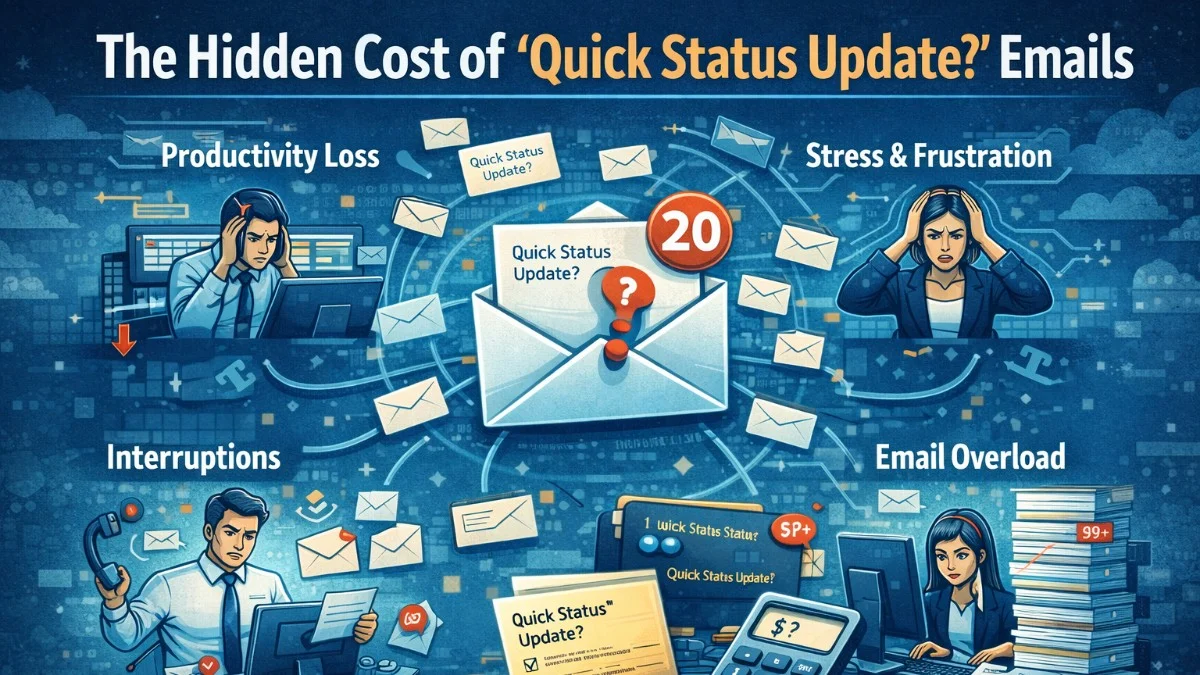
The hidden cost of each status request:
Each "quick question" about project status takes approximately 8-12 minutes:
- Read the email
- Context switch from focused work
- Pull together the information
- Write a thoughtful response
- Handle follow-up questions
At 5-8 requests per project per week, that's 60-90 minutes of status reporting. Per project.
Why clients ask for status:
It's rarely about distrust. It's about visibility.
They're looking for the same things:
- What's been completed?
- What's coming next?
- Are we on schedule?
- Where are my files?
When they can't answer these questions themselves, they email you.
The pattern we've observed:
Teams that implement proactive visibility systems—shared dashboards, regular status updates, transparent milestone tracking—see up to 70% fewer inbound status requests.
Not because clients care less. Because they can find answers without interrupting your team.
The bigger insight:
Self-service visibility isn't lazy. It's scalable.
Every question a client can answer themselves is a question that doesn't interrupt your team's deep work.
What actually works:
→ Make progress visible without clients having to ask → Update status proactively (even when there's nothing major to report) → Create a single source of truth for project information → Set clear expectations about communication rhythm
At ScopeForged, we build these systems into our consulting engagements—and audit existing processes to find gaps.
What's your biggest time sink in client communication?
#ClientManagement #Productivity #SoftwareConsulting #DeliveryExcellence