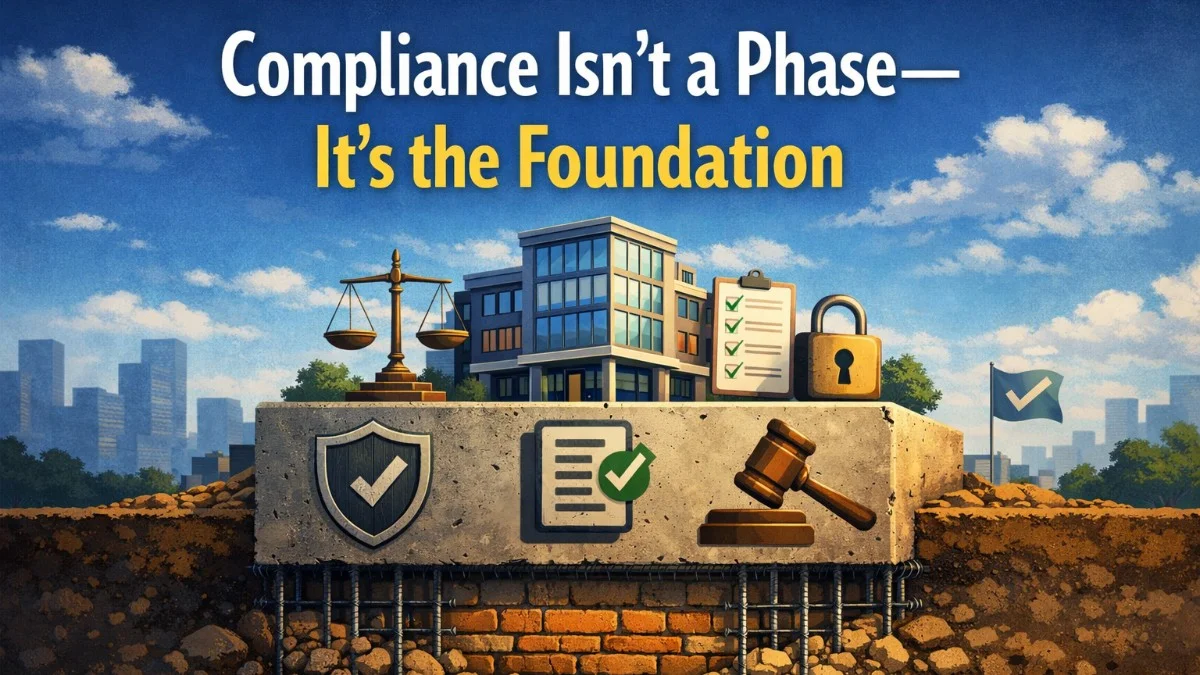
Most software projects treat compliance as a phase.
"We'll build the features first, then make it HIPAA compliant."
That's not how healthcare software works.
Compliance Is Architectural
HIPAA, HITECH, and state regulations aren't features you add.
They're architectural decisions you make on day one.
Because trying to retrofit compliance into existing software is like trying to add a foundation to a house that's already built.
You can't. You have to rebuild.
What Compliance Actually Requires
Encryption everywhere: Data must be encrypted at rest and in transit. Not just the database — backups, logs, error reports, everything.
Comprehensive audit logging: Every access to protected health information (PHI) must be logged. Who accessed what, when, from where, and why.
Granular access controls: Role-based permissions that restrict PHI access to only those who need it. No admin god-mode that sees everything.
Business Associate Agreements (BAAs): Every vendor you use — hosting, email, analytics, monitoring — must sign a BAA. No BAA, no PHI.
Data retention policies: You must keep records for 6 years. And delete them securely after that. Both are legal requirements.
These aren't add-ons. They're the foundation.
The Cost of Getting It Wrong
HIPAA violations are expensive.
→ Tier 1 (unknowing): $100-$50,000 per violation → Tier 2 (reasonable cause): $1,000-$50,000 per violation → Tier 3 (willful neglect, corrected): $10,000-$50,000 per violation → Tier 4 (willful neglect, not corrected): $50,000 per violation
And "per violation" often means "per record."
A breach affecting 1,000 patient records can easily become a seven-figure penalty.
Build It Right or Don't Build It
Healthcare software has no margin for error.
You're handling people's most sensitive information: medical history, diagnoses, treatment plans.
If you're not willing to: → Design for compliance from day one → Budget for security infrastructure → Undergo regular audits → Maintain comprehensive documentation
Then don't build healthcare software.
This isn't a space for "move fast and break things."
Start With Compliance
Every healthcare software project should begin with:
- A compliance audit of your architecture
- Documentation of how PHI flows through your system
- A BAA with every vendor
- Encryption and access control implementation
- Audit logging on every PHI access
Features come after the foundation is solid.
Because a compliant product with fewer features is infinitely better than a feature-rich product that violates HIPAA.
What compliance requirement surprised you most when building healthcare software?
#HealthTech #HIPAA #Compliance #SoftwareDevelopment #HealthcareSoftware
→ scopeforged.com
Philip Rehberger Founder, ScopeForged scopeforged.com