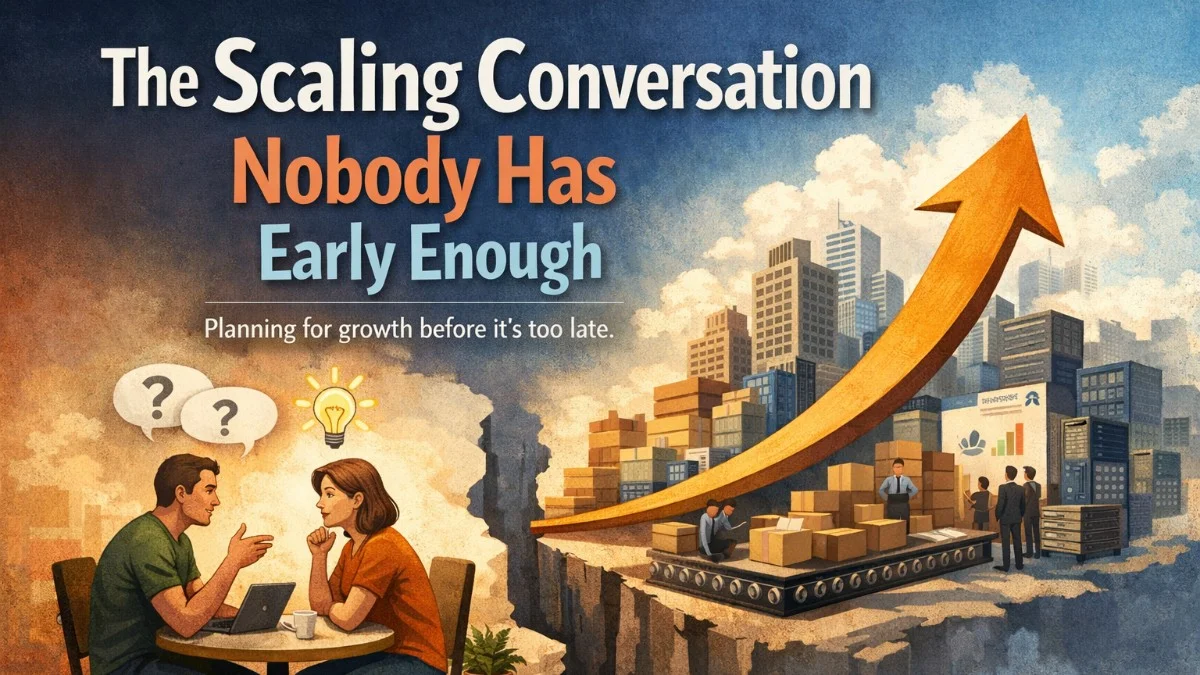
By the time you realize you need to scale, it's already an emergency.
The servers are on fire. Users are complaining. Your team is scrambling. And the conversation you're having now should have happened six months ago.
The scaling conversation that nobody has:
→ What's the expected user growth? 100 users next month? 10,000 next year? → What are the traffic patterns? Steady load or massive spikes? → Where are the data bottlenecks? Reports? File uploads? API calls? → What's the peak load scenario? Black Friday? Tax season? Product launches? → What's the acceptable downtime? Zero? One hour? One day?
These aren't nice-to-know questions. They're architecture decisions.
A system built for 1,000 steady users looks nothing like a system built for 100,000 users with traffic spikes.
I've seen teams build for their current reality and then spend 6 months rewriting everything when they scale. The architecture that got them to 1,000 users actively prevented them from reaching 10,000.
If you answer these questions early: → Scaling is a plan → You build the right architecture from the start → You know what to monitor and when to act → Growth is exciting, not terrifying
If you answer them late: → Scaling is a crisis → You're rewriting code under pressure → You're guessing at solutions → Growth feels like a punishment
The best product launches I've seen had a scaling plan before the first line of code. They knew their growth targets. They knew their traffic patterns. They built accordingly.
The worst launches I've seen? Nobody asked. They built for today and hoped tomorrow would work itself out. It never does.
Have you had the scaling conversation yet? Or are you waiting for the emergency?
#SoftwareDevelopment #Scaling #ProductDevelopment #TechStrategy #GrowthPlanning #StartupLessons
→ scopeforged.com
Philip Rehberger Founder, ScopeForged scopeforged.com