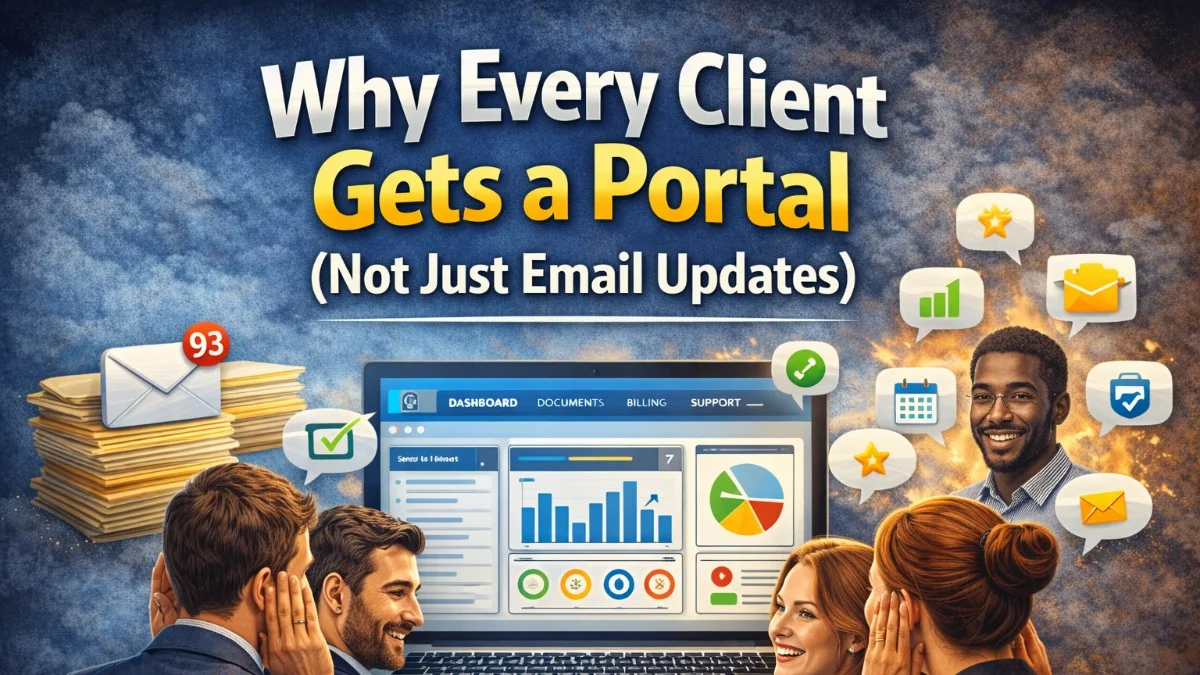
I used to send weekly email updates to clients.
Bulleted list of what we shipped. What's next. Any blockers. Felt professional.
Then I'd get an email three weeks later asking about something I'd already explained. Twice.
Email updates fail because they get buried, forgotten, and forwarded without context.
You send an update. The client reads it. Then it disappears into their inbox under 400 other messages. When they need to reference it, they can't find it.
Or worse, they forward it to their boss without the previous context. Now their boss thinks the project is behind schedule because they're missing the full thread.
So we built a client portal.
Every client gets login credentials on day 1. They see everything we see. In real time.
Here's what's in the portal:
→ Milestone tracking — Visual timeline of every milestone. What's done. What's in progress. What's next. Estimated completion dates. → File sharing — All project files in one place. Designs, documents, contracts, invoices. No more digging through email attachments. → Invoice history — Every invoice, payment, and receipt. Transparent billing. No surprises. → Scope documents — The original requirements, any change requests, all sign-offs. Single source of truth. → Activity timeline — Real-time feed of what we're working on. Commits, deployments, tests, reviews. → Team contacts — Who's working on what. How to reach them. No "reply-all to find the right person."
The biggest benefit isn't the features. It's the trust.
When clients can see the work happening in real time, they stop worrying. They don't need to send "just checking in" emails. They can log in and see for themselves.
We've cut email volume by 60% since launching the portal.
Clients love the invoice section. They can download any invoice, see payment history, and verify billing at any time. No more "can you resend that invoice?" emails.
The activity timeline is the secret weapon.
Every time we push code, run a test, or deploy to staging, it shows up in the timeline. The client doesn't need to understand what "pushed to feature/auth-refactor branch" means. They just see that work is happening.
It's like a live progress bar. And people trust what they can see.
Some agencies worry that too much transparency will stress clients out. "What if they see a failed test and panic?"
That's never happened. Because we explain what they're looking at. Failed tests are part of development. Clients appreciate the honesty.
What stresses clients out is silence. When they don't hear from you for two weeks and assume the project is stalled.
The portal also protects us.
When a client says "I never approved that change," we can point to the exact timestamp when they signed off in the portal.
When a client asks "what happened in February?" we can show them the full activity log.
Documented history beats memory every time.
Building the portal took three months. But it's paid for itself 50x over in reduced support load and faster approvals.
Clients make decisions faster because they have context. They don't need to schedule a call to ask a simple question. They log in, find the answer, and keep moving.
Email is great for conversations. Terrible for project tracking.
If your clients are asking "what's the status?" more than once a month, your communication system is broken.
Give them a portal. Let them see what you see. Build trust through transparency.
Do you use a client portal or project management tool your clients can access? Or is it all email?
#ProjectManagement #ClientRelations #Transparency #AgencyLife #SoftwareDevelopment
→ scopeforged.com
Philip Rehberger Founder, ScopeForged scopeforged.com