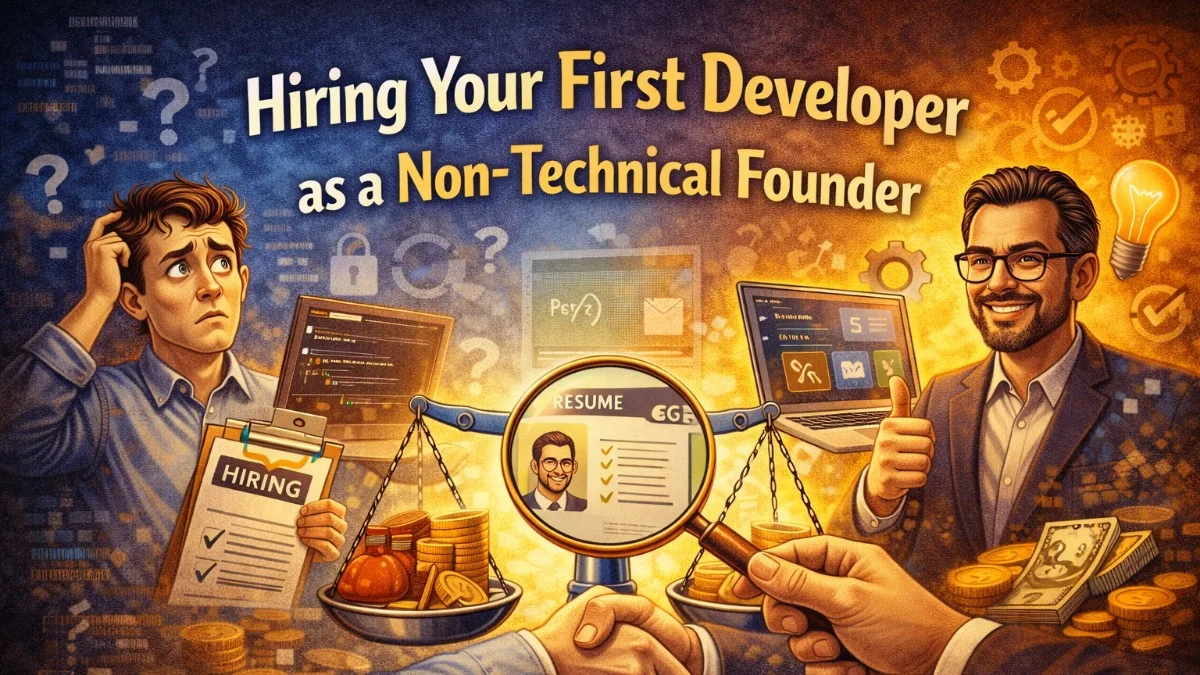
You don't need to know how to code to hire a great developer.
But you do need to know what questions to ask and what signals to watch for.
I've hired dozens of developers at ScopeForged. Here's what I've learned about spotting the good ones — even if you're not technical.
Red flags that scream "run away":
→ Won't share code samples or portfolio projects → Can't explain their approach in simple terms (good developers can translate technical concepts) → Portfolio full of started projects, none actually finished and deployed → Gives you a quote without asking about your users, goals, or success metrics → Promises everything will be "easy" or "quick"
If they can't communicate clearly now, imagine trying to work with them for months.
Green flags that signal quality:
→ Asks hard questions before talking solutions ("Who are your users?" "What's your biggest risk?" "What happens if this fails?") → Shows you their process documentation, not just their code → Offers references from past clients (and actually provides them) → Gives realistic timelines and explains the tradeoffs → Willing to do a paid assessment project before committing to the full build
That last one is key. A paid "test drive" protects both of you. You see their work quality, communication style, and ability to deliver. They get compensated for their time.
At ScopeForged, we do this with every client. Our paid project assessments include a full technical audit, architecture recommendations, and risk analysis. If we're not the right fit, the client still gets massive value.
The same principle applies when you're hiring.
The bottom line? You don't need to review their code. But you do need to assess their communication, process, and professionalism. Great developers explain their work. Mediocre ones hide behind jargon.
What's your best (or worst) hiring story?
#Hiring #TechHiring #NonTechnicalFounder #Startups #Development
→ scopeforged.com
Philip Rehberger Founder, ScopeForged scopeforged.com