The pitch was perfect.
"We can build that for $40K. The other guys quoted $70K."
My client went with the cheap option. Saved $30K upfront.
18 months later, they called me.
They'd spent $90K trying to fix what they bought.
Here's what actually happened:
Month 1-3: Everything seemed fine. System launched. Invoices sent. Money saved.
Month 4: First bug. Takes 2 weeks to get a response. Developer says "not in scope."
Month 6: Performance issues. Pages take 8 seconds to load. No monitoring was built in.
Month 8: Client needs a new feature. Original developer quotes $15K for something that should cost $3K. Why? No documentation. No tests. He has to reverse-engineer his own code.
Month 10: Critical bug in billing. Invoices calculated wrong for 3 months. Developer ghosts them.
Month 12: They hire a new dev to fix it. He opens the codebase and says: "This needs to be rebuilt."
The cheap option included:
→ No automated tests → No documentation → No error handling → Hardcoded values everywhere → No code review → No security audit → No deployment process
It wasn't software. It was a liability.
They ended up paying:
→ $40K for the original build → $25K in emergency fixes and workarounds → $15K for a contractor to document and patch → $50K for a rebuild
Total: $130K
The "expensive" option would have cost $70K. Done right. Once.
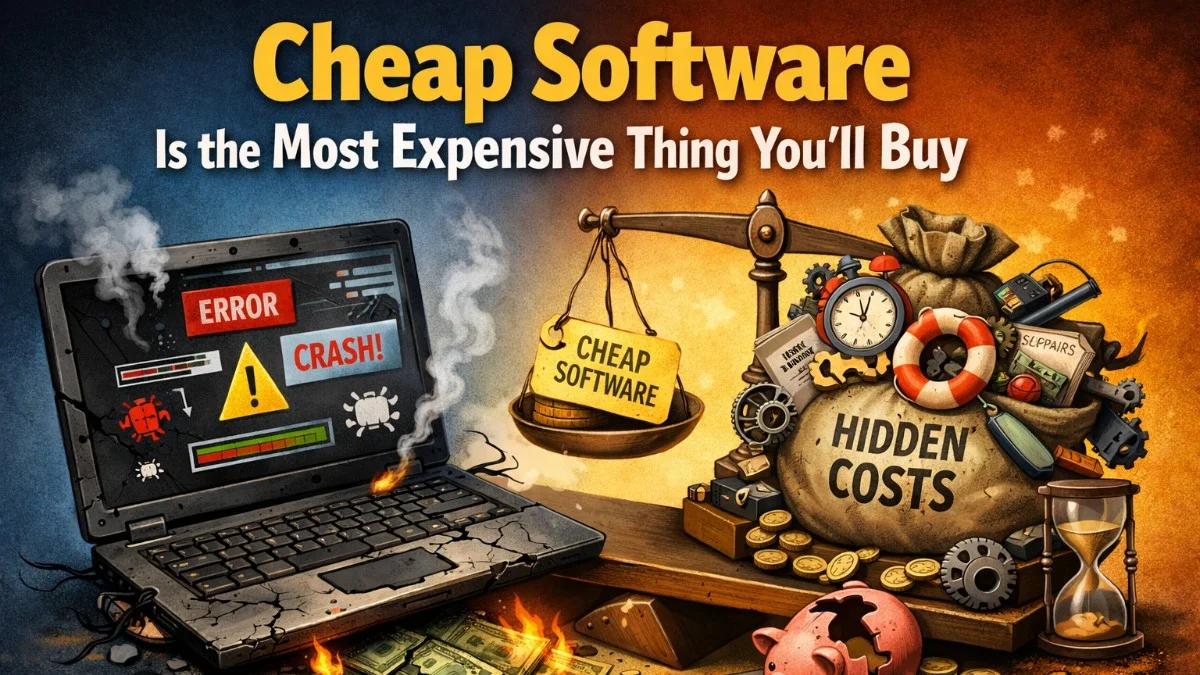
Cheap software isn't a discount. It's a down payment on a much bigger bill.
Have you ever paid for cheap software? What did it actually cost you?
→ scopeforged.com
Philip Rehberger Founder, ScopeForged scopeforged.com
#SoftwareDevelopment #TechDebt #QualityMatters #BusinessLessons #TrueStory