I stopped looking at resumes three years ago.
Not entirely. But they're the last thing I consider now.
Here's what we do instead:
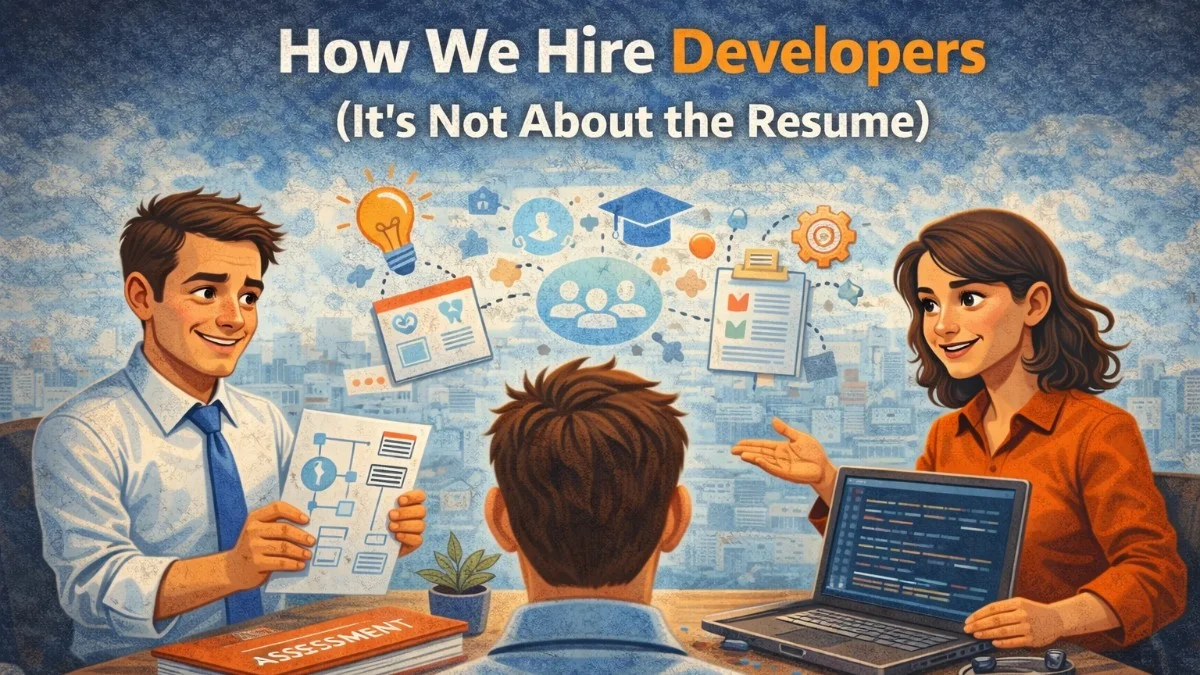
We give every candidate a real-world project scenario.
Not FizzBuzz. Not a whiteboard algorithm. A real problem from a past project.
"A client needs to migrate 50,000 user records from their old system. Some records are duplicates. Some have invalid emails. They need it done in 48 hours without downtime."
Then we watch how they think.
→ Do they immediately jump to code? → Do they ask clarifying questions? → Do they consider edge cases? → Can they explain their approach to a non-technical person?
The best candidates don't give us the "right answer" right away.
They ask: "What's the client's risk tolerance? Do we have a rollback plan? How do we define a duplicate?"
Technical skills can be taught.
Someone doesn't know Docker? We'll teach them.
They haven't used Laravel? They'll learn.
But communication? Problem-solving? Client empathy?
Those are much harder to teach.
We've hired developers with gaps in their technical knowledge who became our best performers.
Because they knew how to think, how to learn, and how to collaborate.
The resume shows me what you've done.
The scenario shows me how you think.
And that's what matters when things break at 2am on a client project.
What qualities do you look for when hiring developers?
#SoftwareDevelopment #Hiring #TechRecruitment #DeveloperCulture #TeamBuilding
→ scopeforged.com
Philip Rehberger Founder, ScopeForged scopeforged.com