I tell potential clients "no" all the time.
Not because I don't want their business. Because custom software isn't always the right answer.
Last month, a founder came to me wanting a custom CRM. Budget: $35K. Timeline: 8 weeks.
I showed him HubSpot, Pipedrive, and Close. Told him to pick one and save his money for the features that actually differentiate his business.
He thanked me. Signed up for HubSpot. We're now building the custom integrations that connect HubSpot to his unique fulfillment workflow.
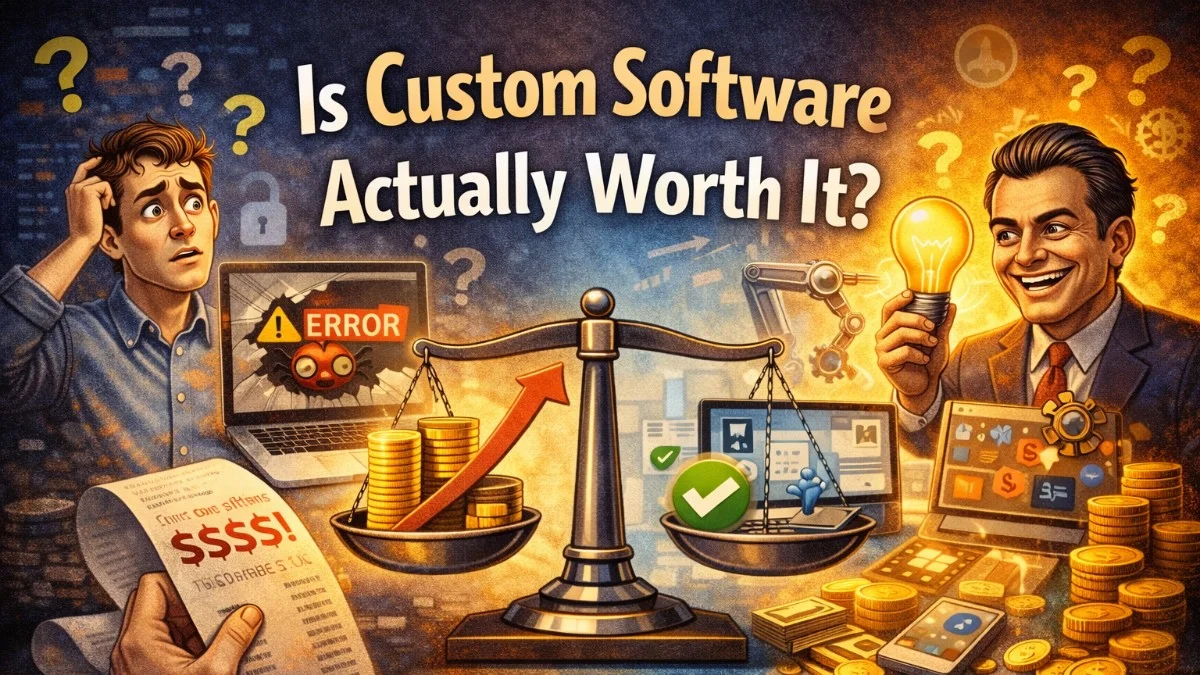
Here's when custom software IS worth it:
→ Off-the-shelf tools can't match your core workflow → You need a competitive advantage, not just efficiency → Complex integrations between systems are costing you hours daily → You have validated user needs (not just assumptions) → Your budget supports proper discovery and iteration
Here's when it's NOT worth it:
→ A SaaS tool solves 90% of your problem → Your budget is under $20K (explore no-code first) → You haven't validated demand with real users → You're chasing features competitors have (without knowing if they work) → You want to "disrupt an industry" without domain expertise
The decision framework I use:
If existing tools can get you to 80% of your goal, use them. Invest custom development in the 20% that's uniquely yours.
That's where ROI lives.
At ScopeForged, we start every engagement with a paid project assessment. Half the time, we recommend a hybrid approach: SaaS for commoditized features, custom code for differentiation.
The goal isn't to build software. It's to solve problems profitably.
Sometimes that means building. Sometimes it means buying. Sometimes it means waiting.
What problem are you trying to solve? Would love to hear if custom, SaaS, or hybrid makes sense for your use case.
#CustomSoftware #SoftwareDevelopment #ProductStrategy #TechConsulting #BuildOrBuy
→ scopeforged.com
Philip Rehberger Founder, ScopeForged scopeforged.com