You don't need a 50-page spec to call a developer.
You don't need wireframes. You don't need to know what tech stack to use. You don't need to pretend you understand APIs.
You need clarity about the problem.
Here's what actually matters when you reach out:
The 6-Item Checklist
1. A Clear Problem Statement
Not the solution. Not "I need a mobile app." Instead: "Our field techs waste 2 hours a day filling out paper forms and re-entering data."
2. Who Are the Users?
How many people will use this? Are they internal employees, customers, or both? What's their technical comfort level?
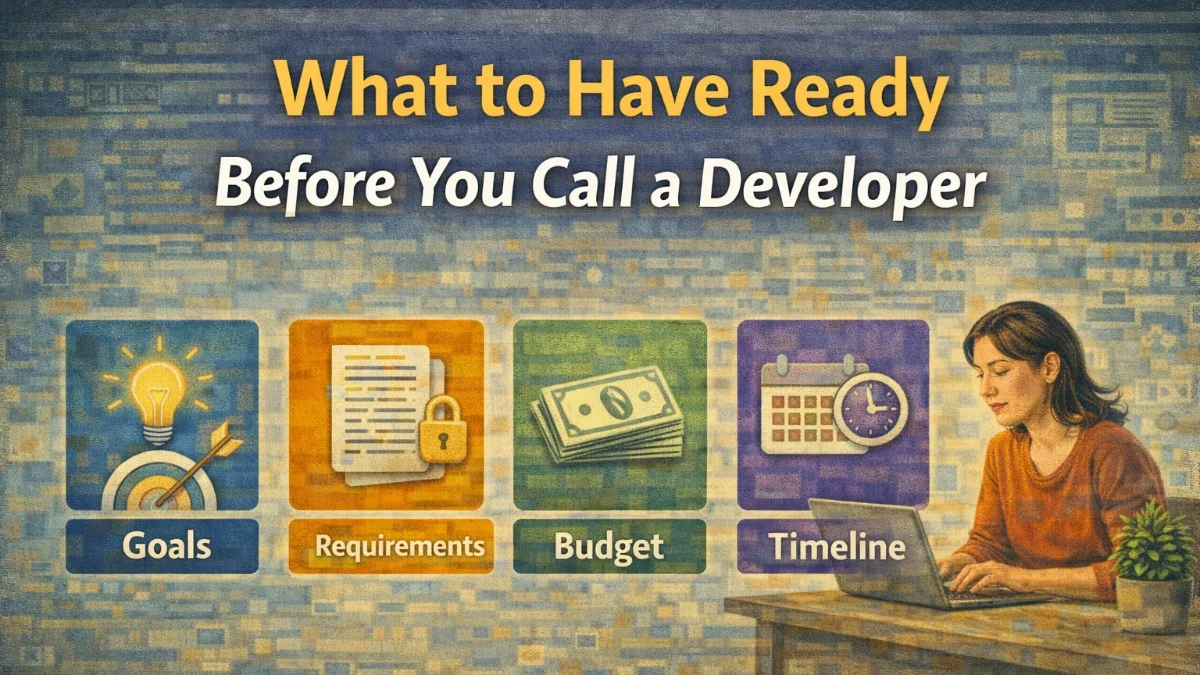
3. Budget Range (Even Rough)
"We have $30-50K" or "We're bootstrapped, under $20K" or "Budget is flexible if it solves the problem." It helps us recommend the right approach.
4. Timeline Expectations
"We need it before Q4" or "No rush, we're planning ahead" or "Yesterday" (we get it).
5. Who Makes Decisions?
Single point of contact. Not a committee. Not "I'll check with the team." One person who can say yes or no.
6. What Have You Already Tried?
Off-the-shelf tools? Spreadsheets? Duct tape and prayer? This context helps us understand why you need custom.
What You DON'T Need
→ Technical knowledge → Wireframes or mockups → A detailed feature list → To know the "right" technology
Good developers ask questions. Our job is to turn your problem into a solution. Your job is to be clear about the problem.
That's it. That's the list.
If you have those 6 things, you're ready to have a productive first conversation with any developer worth hiring.
What would you add to this list?
#SoftwareDevelopment #BusinessSystems #CustomSoftware #ProductDevelopment
→ scopeforged.com
Philip Rehberger Founder, ScopeForged scopeforged.com