The hardest question in software:
"Should we spend more?"
Sometimes the answer is yes. Sometimes it's a trap.
Here's how to know the difference:
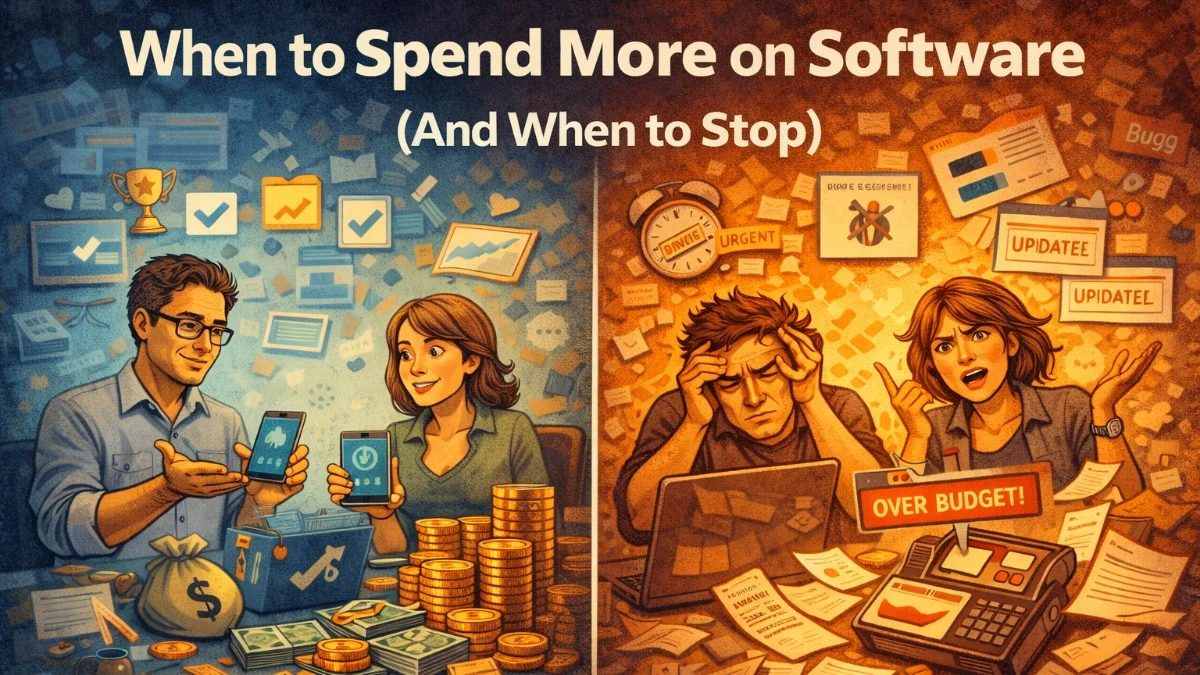
Spend more when:
1. Each dollar invested returns measurable value
→ Time saved that your team can reinvest → Revenue directly enabled by the feature → Errors prevented that would have cost money
If you can't measure the return, you can't justify the spend.
2. Users are actively engaged and asking for improvements
Your customers are using the platform and requesting specific enhancements.
That's a signal to invest. They're telling you what they value.
3. You're hitting technical limits that block business growth
→ The system can't handle your current user load → Manual workarounds are slowing your team down → Integrations you need aren't possible with the current architecture
These are business blockers, not nice-to-haves.
Stop when:
1. You're adding features nobody uses
Look at your analytics. If the last 3 features you built have < 10% adoption, stop building.
Start listening.
2. You're chasing a competitor instead of your own users
"They have this feature, so we need it too."
No. You need what your users need. Competitor features are a distraction unless your users are asking for them.
3. The ROI per dollar is declining
Your first $50K delivered massive value.
The next $50K delivered... less.
The next $50K feels like diminishing returns.
That's your signal. You've hit the inflection point.
The best software investments are the ones you can justify with data.
The worst are the ones you justify with "what if."
Know your inflection point. Respect it.
What's your rule for when to stop investing in a platform?
#SoftwareDevelopment #ProductStrategy #ROI #TechLeadership #StartupGrowth
→ scopeforged.com
Philip Rehberger Founder, ScopeForged scopeforged.com