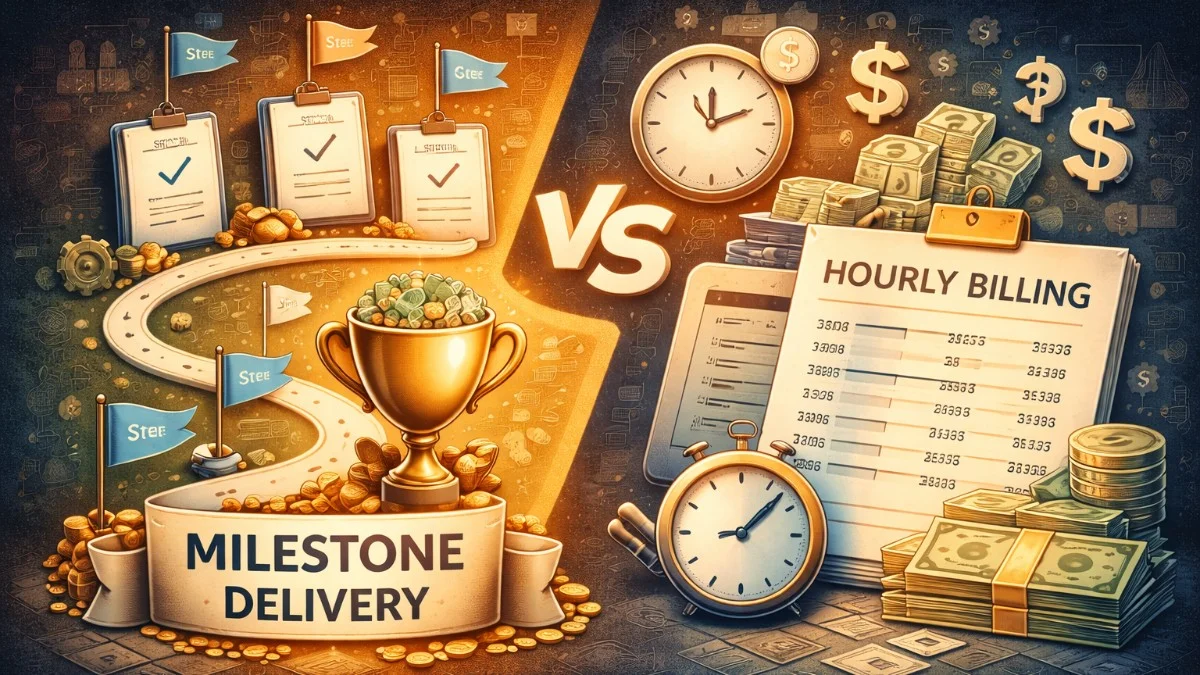
Why Milestone-Based Delivery Beats Hourly Billing
Hourly billing creates misaligned incentives. Here's why milestones work better for everyone.
Feb 8, 2026
1 min read
Insights on software development, technical strategy, and building reliable systems.
Hourly billing creates misaligned incentives. Here's why milestones work better for everyone.
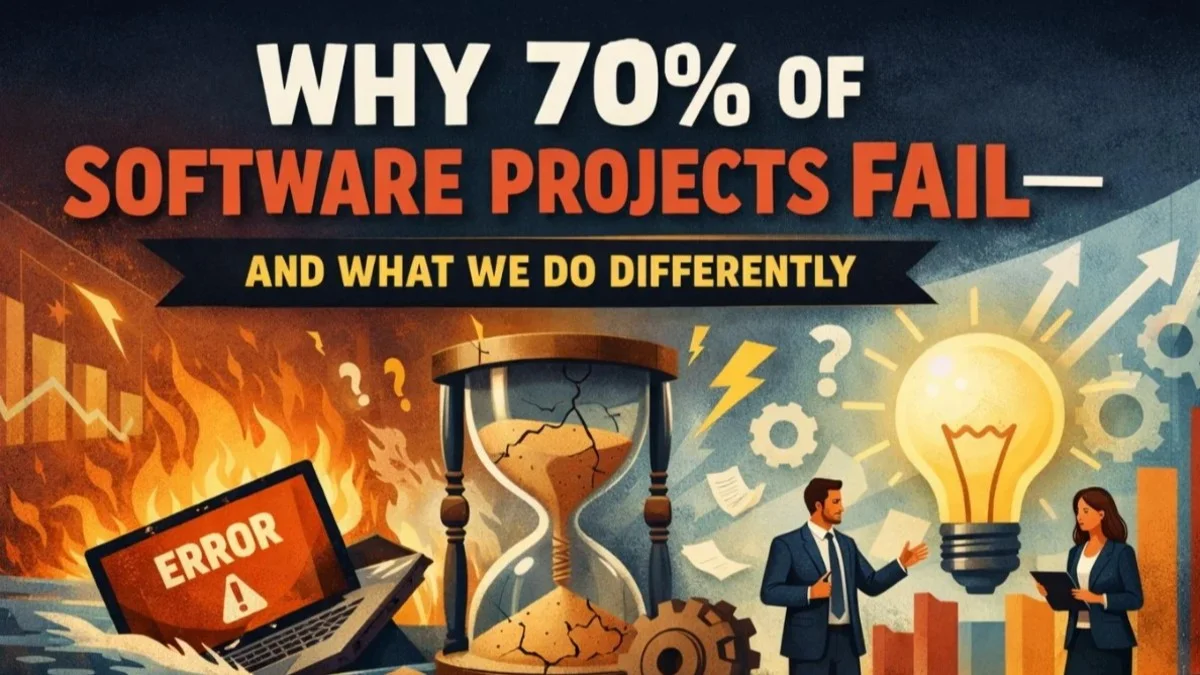
The statistic is sobering: 70% of software projects fail to deliver on time, on budget, or on scope. Here's what causes these failures and how to prevent them.

Technical debt is inevitable, but it doesn't have to be unmanageable. Learn strategies for keeping it under control.
Move past framework magic and understand DI as a design tool. Constructor vs setter vs interface injection compared.

Move beyond a single event bus when teams or regions multiply. Covers federation, schema registries, and routing.

Route writes to primaries and reads to replicas without replication-lag bugs. Covers consistency hints and stale-read mitigation.

Standardize new services with paved-road templates. Covers what belongs in the template and what does not.
Design retries that recover without amplifying outages. Includes idempotency requirements and budget patterns.

Move past textbook CAP and use PACELC to reason about real systems. Concrete examples from popular databases.
Choose between centralized warehouse and federated data mesh. Covers ownership, discovery, and governance tradeoffs.
Eliminate shared state to scale horizontally without contention. Covers partitioning, replication, and routing.
Push retries, TLS, and observability into a sidecar ambassador. Useful for legacy services and language-agnostic policy.

Aggregate data from multiple services without coupling them. Covers BFF and gateway-side composition.
Atomically write to a database and a message queue. Covers polling vs CDC outbox implementations.
Build collaborative apps without coordination using CRDTs. Counters, sets, and text — when each variant fits.
Let's discuss how we can help you build reliable software.
We use cookies to analyze site usage and improve your experience. By continuing to use this site, you agree to our use of cookies. Learn more about our privacy policy